

Revision history
Failure Mode
Every saved editorial version remains available. Text, structure, images, diagrams, and embeds are tracked as part of the article rather than flattened into one edit summary.
1 revision
Current version: v1
- Version 1Current
Initial publication
Initial publication on how the phrase failure mode turns repeated mistakes into evidence about design while also creating a possible escape from personal responsibility.
1,278 words1 section3 imagesAugust 16, 2026
Kris Haamer
Visuals in the initial version
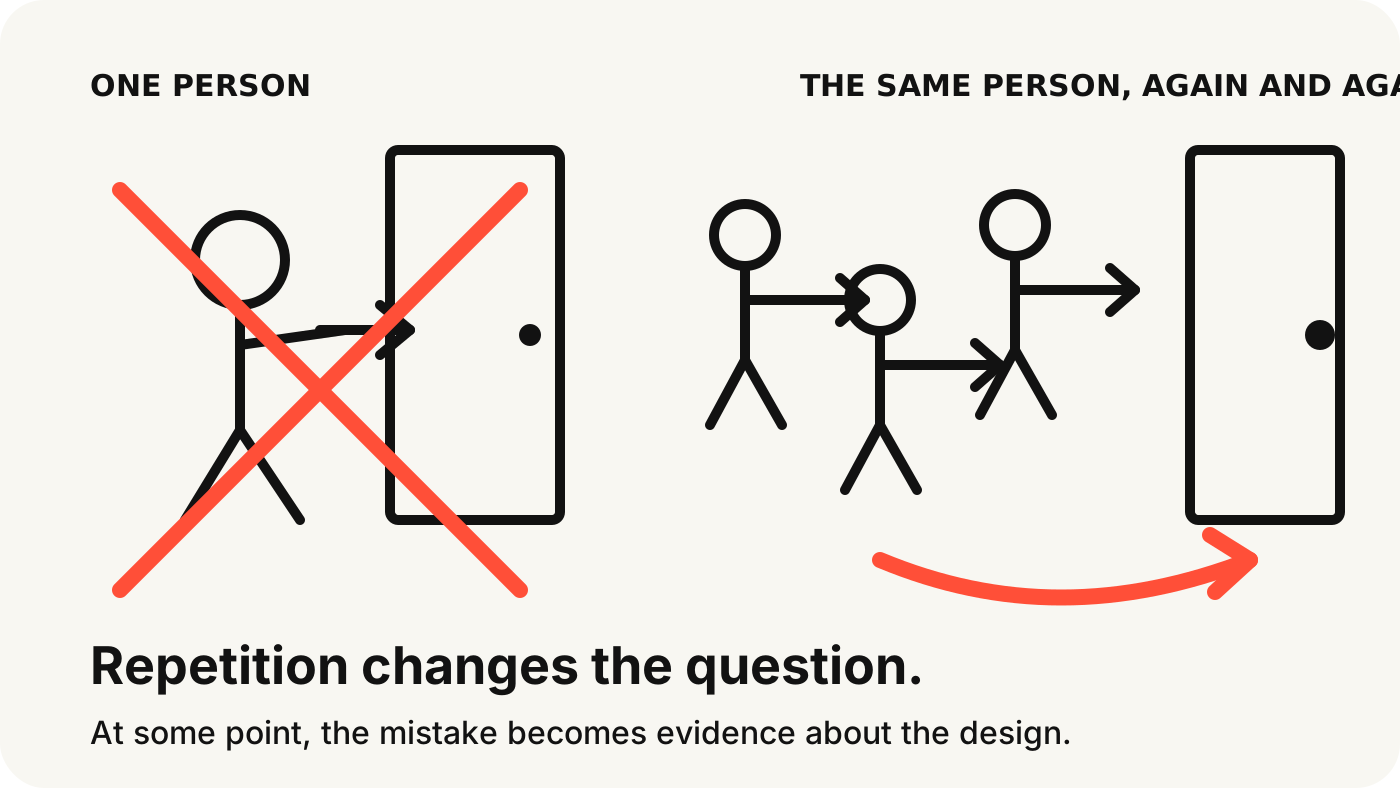
One person is blamed for pushing the wrong way while a stream of people reveals that the door itself is producing the same mistake.
A repeated mistake becomes evidence about the design.
/blog/failure-mode/door.svg
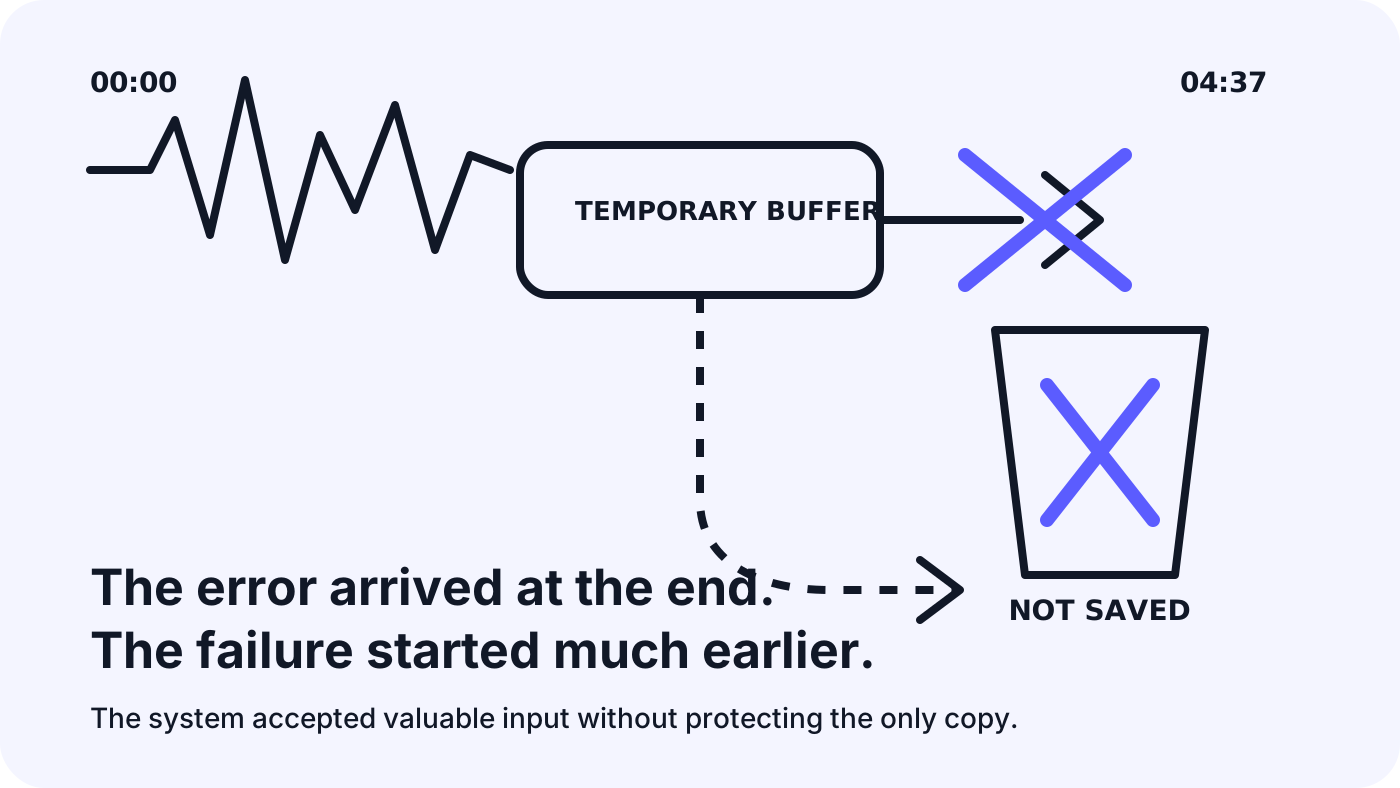
Several minutes of speech enter a system with no local safety net and disappear at the first broken connection.
The error appears at the end, but the failure was designed much earlier.
/blog/failure-mode/buffer.svg
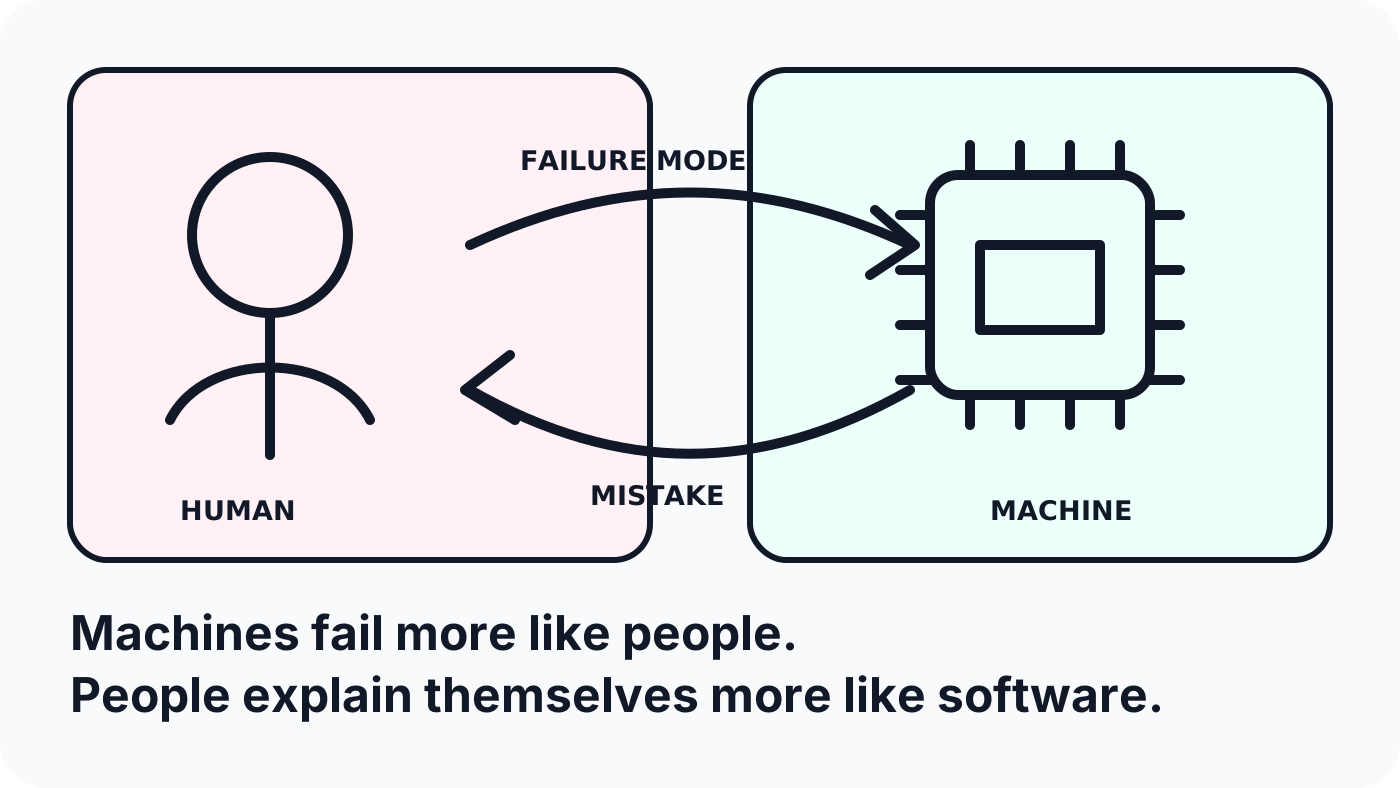
A human and an AI system exchange labels until the machine fails like a person and the person explains themselves like a machine.
Machines are becoming more human in how they fail while people become more computational in how they explain themselves.
/blog/failure-mode/crossover.svg