

July 8, 2026 · 4 min read
The ZK Layer Was Also a Social Layer in Seoul
A Seoul field note from ETH Seoul: cryptography talks, proof systems, censorship-resistance slides, POAP rituals, prize moments, and the city context around a technical community.
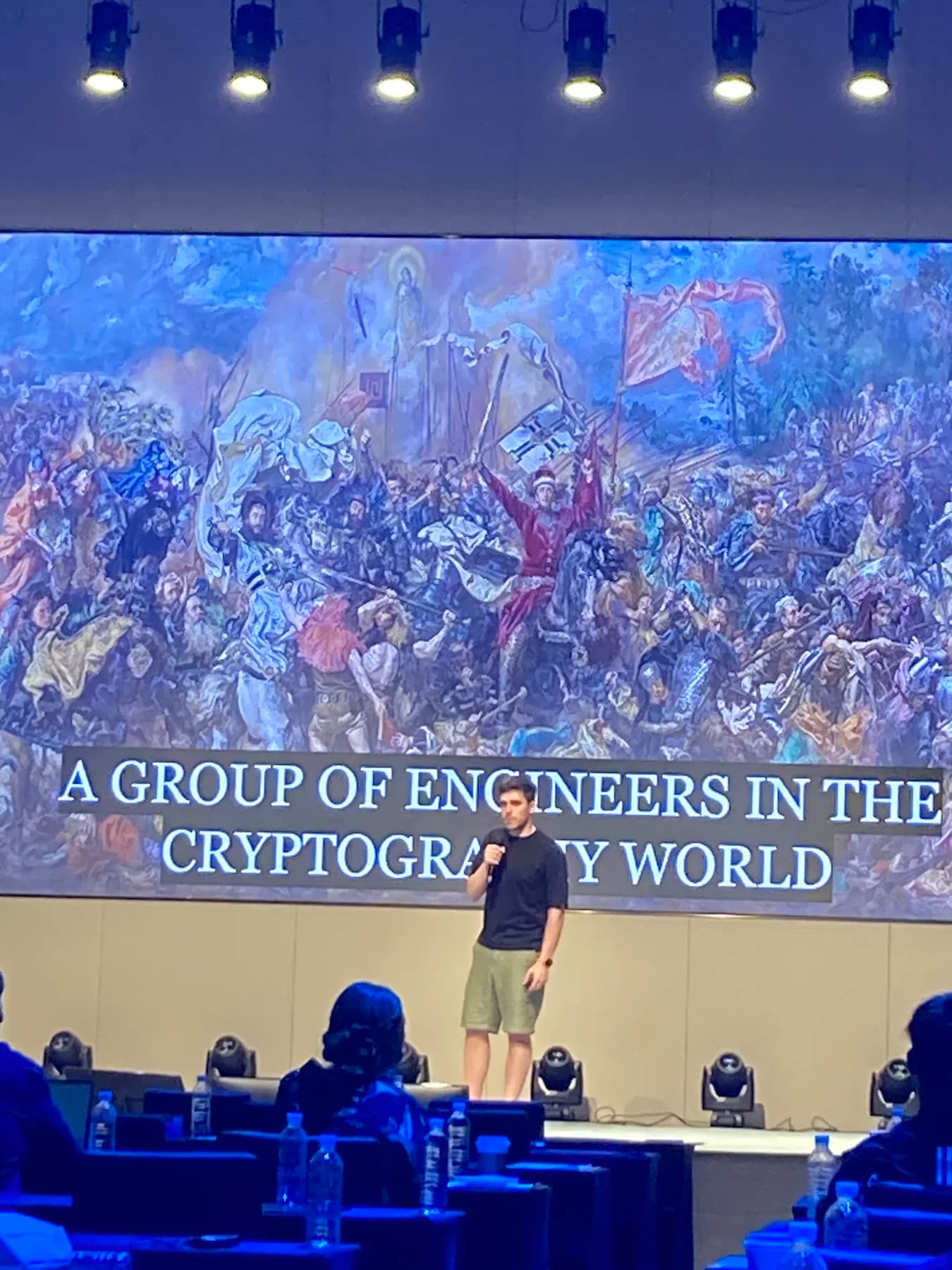
Table of contents
A cryptography event is not only a technical programme
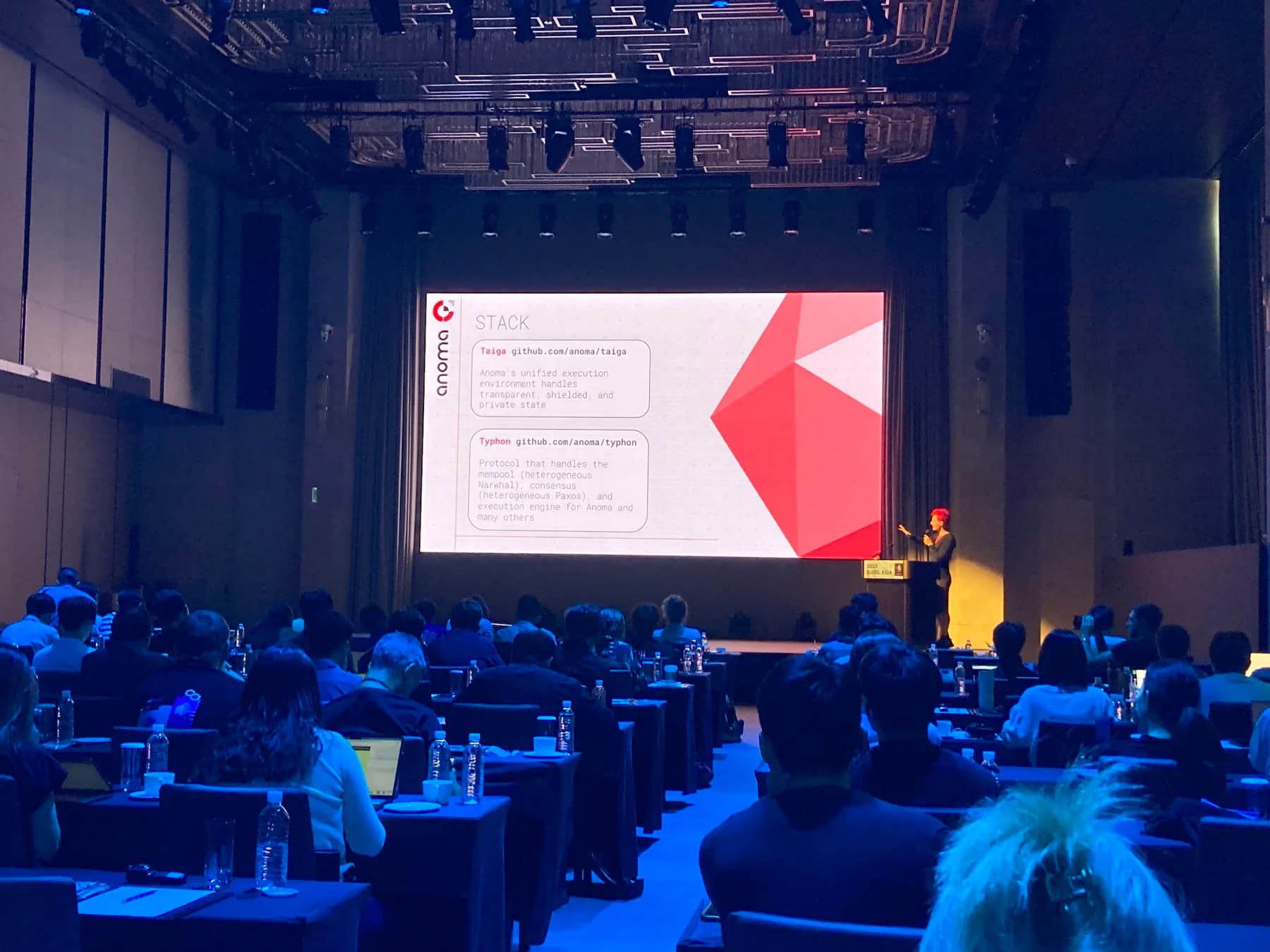
The Seoul archive is full of screens, stages, maps, badges, food, side events, and small fragments of coordination. ETH Seoul appears here as a technical gathering, but the useful design question is broader: how does a city make an abstract infrastructure conversation feel present?
Zero-knowledge systems are hard to explain because they ask people to trust a mathematical promise they cannot see directly. The event environment does some of that translation work. A lecture hall, a slide, a panel, a POAP QR code, a route around the city, and an evening installation all become parts of the interface around the protocol conversation.
That does not make the math simpler. It makes the community legible enough that someone can begin to orient themselves inside it.
Proofs need social handles
The most literal proof artifact in the archive is not a circuit diagram. It is a running POAP: a QR code for a 5K run at Seok-chon Lake during ETH Seoul. That small object says something important about technical communities. People do not only learn through talks. They join through rituals.
A POAP works as a souvenir, identity marker, memory object, and lightweight participation record. It turns a side activity into a trace that can travel with the person afterward. For a ZK community, that is a useful contrast: some proofs are formal and invisible, while some proofs are social and deliberately easy to show.

The slides made the stakes visible
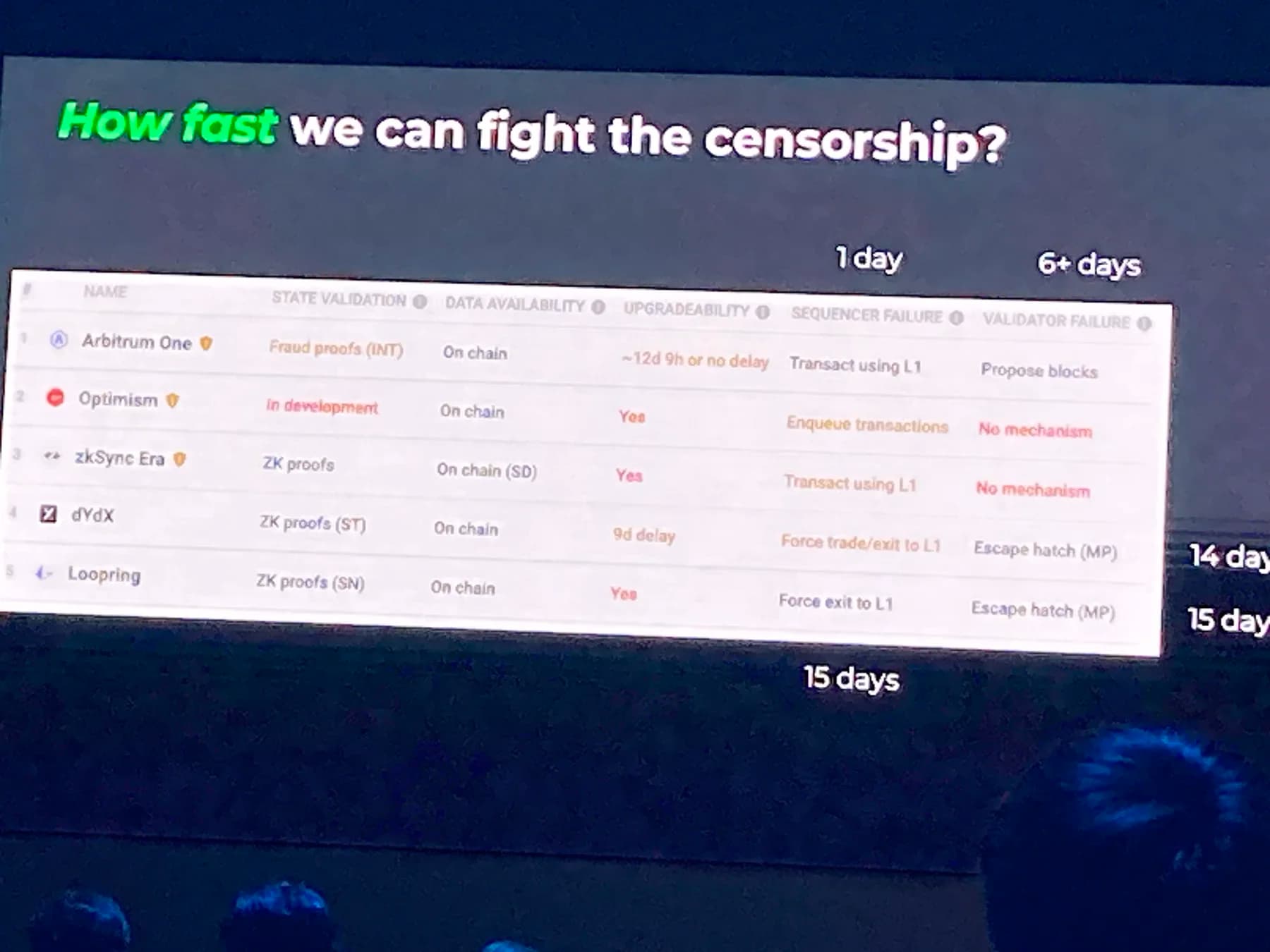
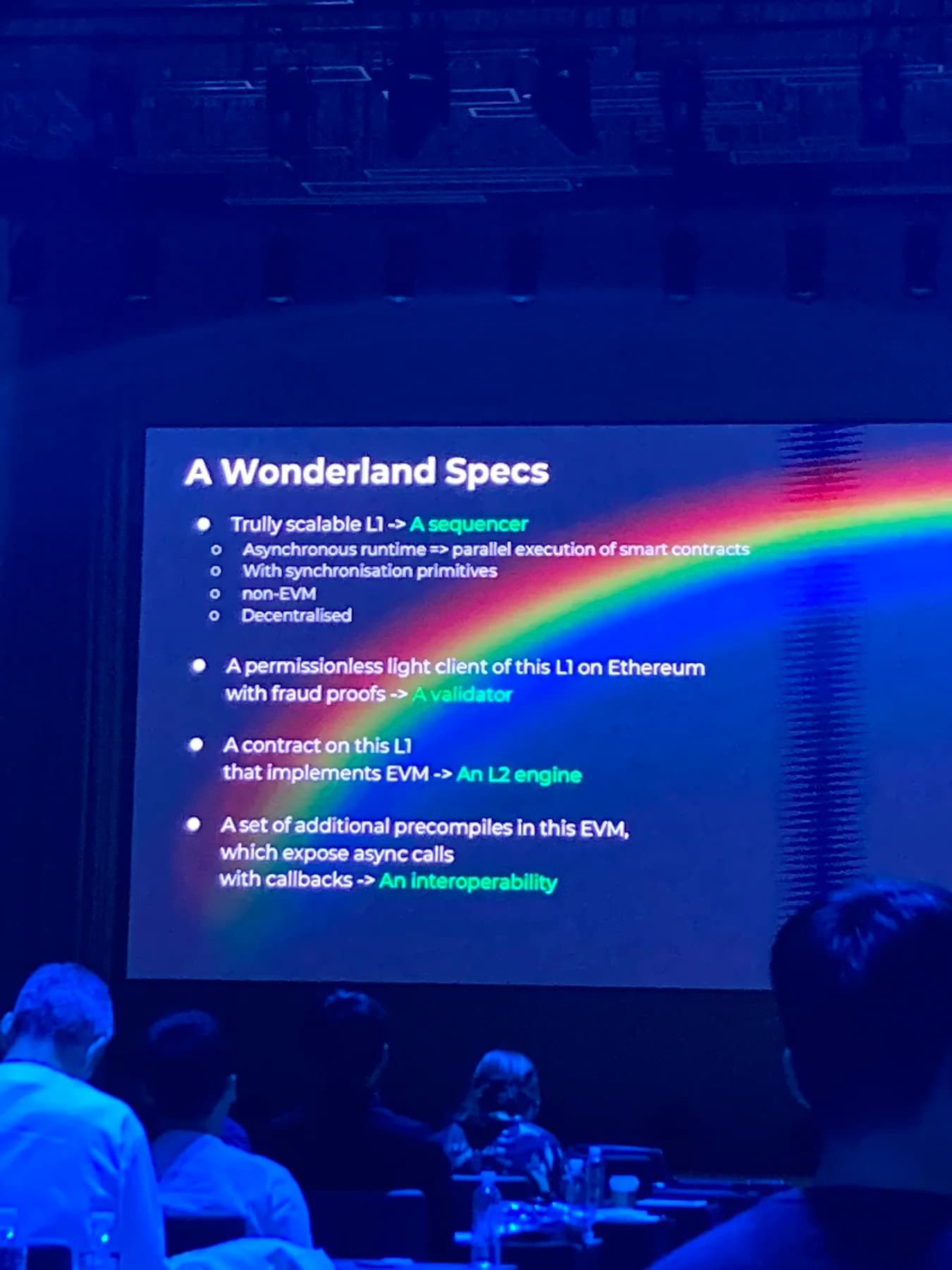
Several images in the archive are useful because they show technical language becoming public language. One slide asks how fast a system can fight censorship. Another labels a ZK design space as a wonderland of specifications. These are not decorative phrases. They are attempts to make invisible infrastructure feel discussable in a room full of builders.
The product lesson is that abstract security properties need visible orientation. A person should be able to tell whether a talk is about censorship resistance, interoperability, performance, standards, account models, or developer ergonomics before the details become dense. Good event slides do part of the same job as good interface states: they keep people from getting lost too early.
Panels turned infrastructure into conversation
The panel footage and photos are not valuable because they preserve every word. They are valuable because they show the translation layer around the technical work. A person on stage has to choose examples, pace, vocabulary, posture, and the amount of uncertainty they are willing to expose in public.
That is where crypto UX often begins before anyone opens a wallet. If a community cannot explain what matters in a room, the product interface will inherit that confusion later. Seoul made the surrounding work visible: not only the protocol, but the conversation architecture that helps people decide what deserves attention.

Video note
The clip shows a seated panel conversation on the ETH Seoul stage. The value for the post is the format: technical infrastructure becomes social explanation through people, questions, and pacing.
The community had a body
The archive also includes food, evening installations, streets, screenshots, and prize moments. These are not distractions from the technical post. They are evidence that infrastructure communities are embodied. People sit through sessions, move between venues, eat together, collect small tokens, celebrate, and carry the event back into the city.
That matters for ZK because the technology often describes itself through abstraction: proofs, privacy, compression, verification, execution, accounts. The social layer gives those abstractions a place to land. It creates memory, trust, and a reason to continue the conversation after the slide is gone.

Video note
The clip shows Kris Haamer in an ETH Seoul room holding a prize sign. The visible detail is not the prize amount alone, but the way a community turns contribution into a public moment.
What the post adds to the HAAM archive
The Seoul ZK note belongs in the HAAM archive because it connects technical infrastructure to experience design. It shows how a field that can sound purely mathematical still depends on rooms, language, proof artifacts, status rituals, wayfinding, and city context.
The lesson is not that every protocol needs more branding. It is that every protocol already has an interface, even before the product ships. The interface lives in the talk, the diagram, the side event, the run, the panel, the shared meal, the prize, the screenshot, and the memory people carry away.
A ZK layer can verify a statement. A social layer helps people decide why the statement matters, who is building around it, and whether they want to keep showing up.
Photo notes
Evidence from the floor
Recommended reading
Read next
4 min read
Inside China's Beauty Innovation Stack
Field observations from CiE 2026 in Hangzhou on how Chinese beauty brands connect research, packaging, manufacturing, commerce, and consumer experience.
5 min read
WordCamp Asia 2024 in Taipei: Accessibility Is Interaction Design at Event Scale
A field note from WordCamp Asia 2024 in Taipei on how conferences, captions, venue design, food, movement, and open-source community become interaction design.
3 min read
AI Frontiers 2017 Field Note
A first-person field note from AI Frontiers 2017 in Santa Clara, before applied deep learning had fully settled into everyday product interfaces.