

Revision history
Claude Design Can Touch the Canvas, but Not the Product
Every saved editorial version remains available. Text, structure, images, diagrams, and embeds are tracked as part of the article rather than flattened into one edit summary.
2 revisions
Current version: v2
- Version 2Current
Editorial revision
Rewrote the essay around four original SVG diagrams showing the surviving handoff, the hidden consequences of visual edits, the difference between generation and iteration, and a model for operational design.
1,784 words6 sections4 images1 quote+4 visualsJuly 26, 2026
Kris Haamer
Visuals added in this version
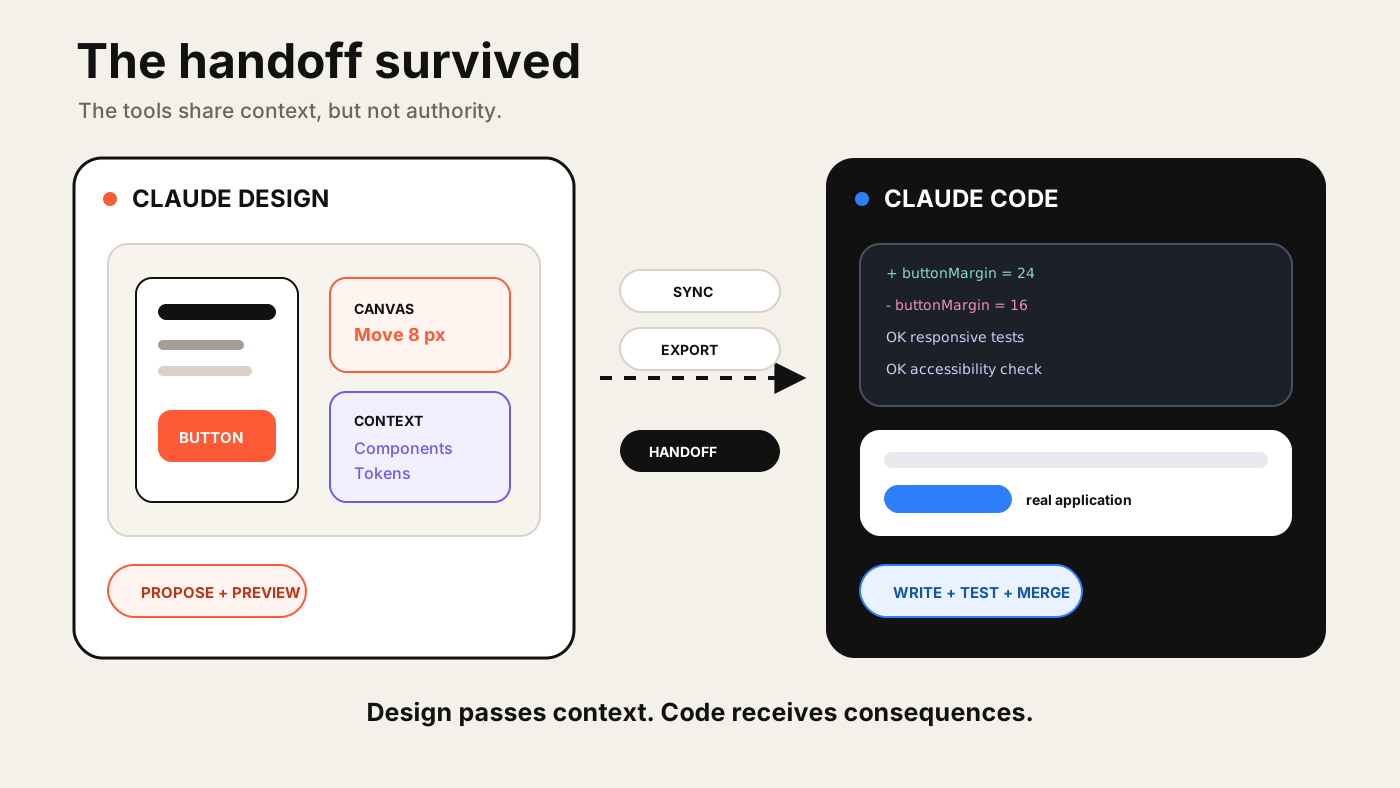
Diagram comparing the authority of Claude Design and Claude Code
Claude Design can propose and preview. Claude Code retains the authority to write, test, and merge changes into the real product.
/blog/claude-design-can-touch-the-canvas-but-not-the-product/handoff.svg
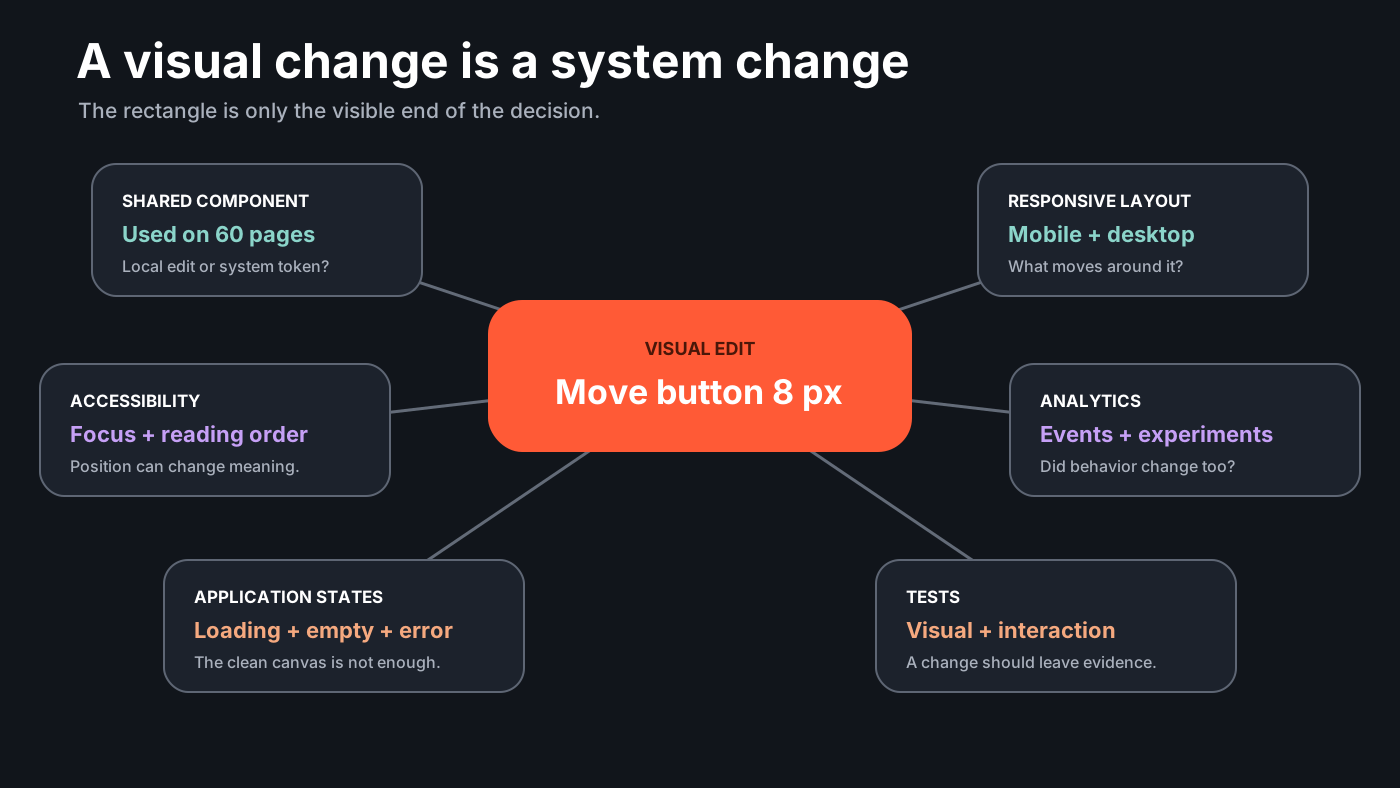
Diagram showing the system consequences of moving one button
A visual edit can reach shared components, responsive layouts, accessibility, analytics, application states, and tests.
/blog/claude-design-can-touch-the-canvas-but-not-the-product/button-consequences.svg
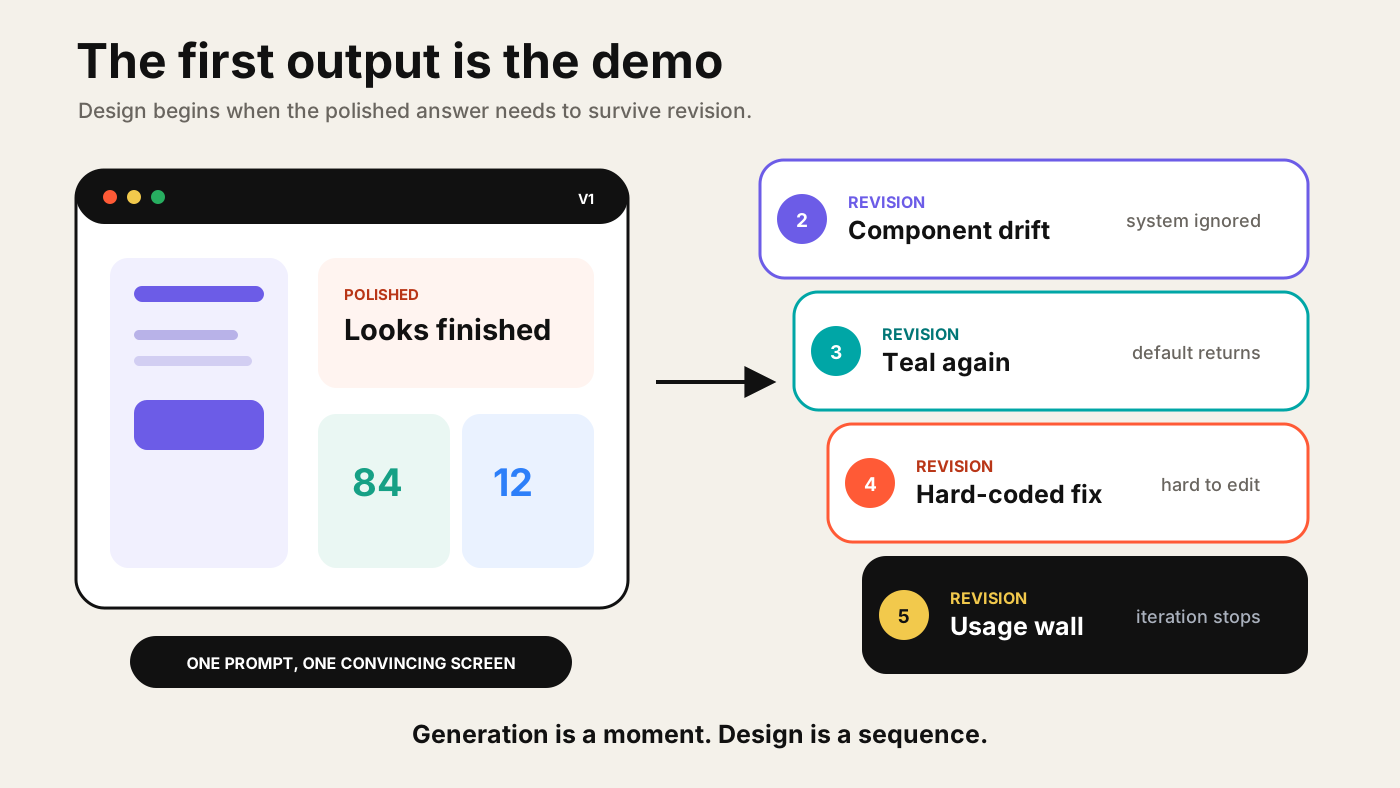
Diagram contrasting a polished first generation with increasingly difficult revisions
The first generation can look complete. Design begins when the system has to survive component drift, repeated defaults, hard-coded fixes, and continued iteration.
/blog/claude-design-can-touch-the-canvas-but-not-the-product/iteration.svg
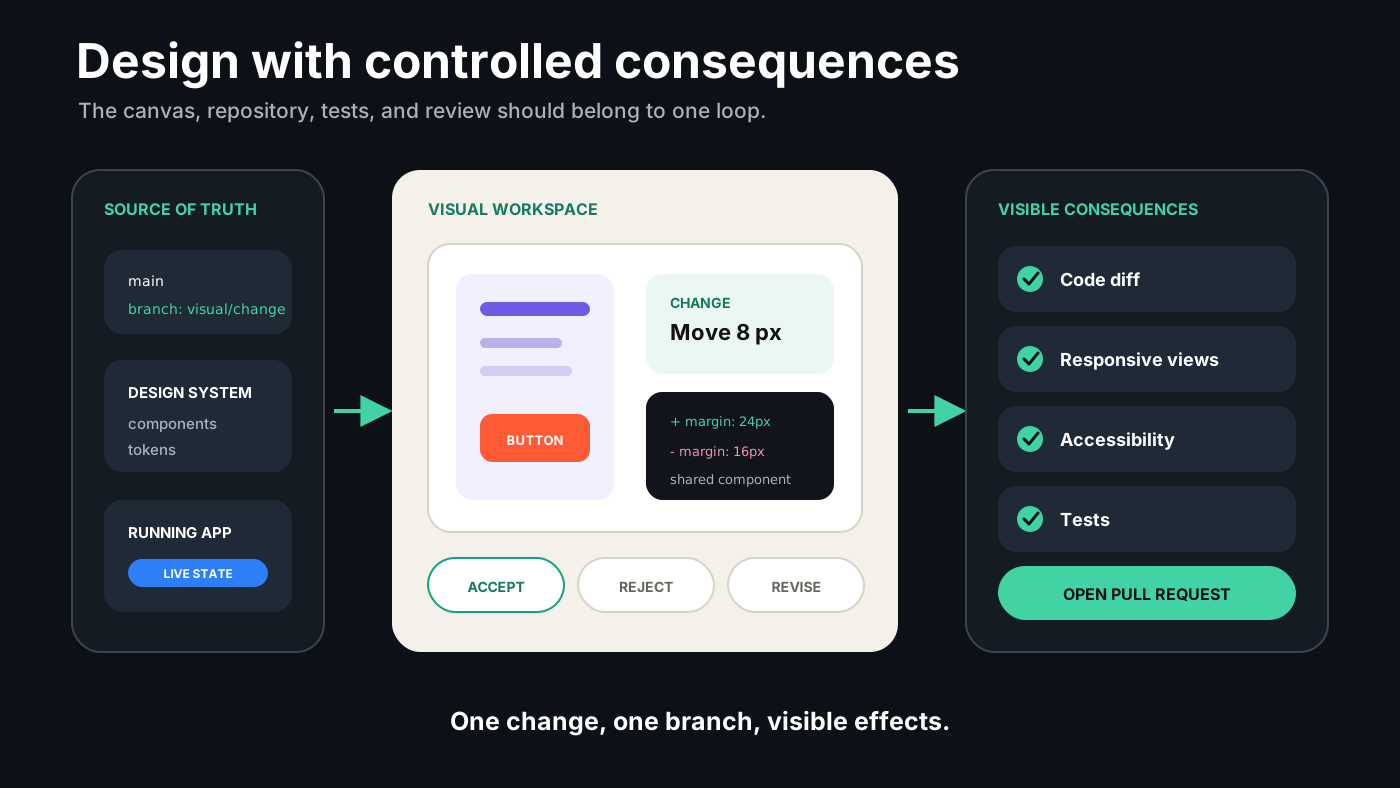
Diagram of an operational visual design environment connected to code and review
A visual design tool could operate safely through the same infrastructure as code: a branch, visible diff, responsive previews, accessibility checks, tests, and a pull request.
/blog/claude-design-can-touch-the-canvas-but-not-the-product/operational-design.svg
- Version 1
Initial publication
Initial publication examining why Claude Design can work with real design systems and sync with Claude Code while still leaving the authority to change the actual product on the coding side of Anthropic's product boundary.
1,733 words2 sectionsJuly 26, 2026
Kris Haamer