

2026-07-29 · 4 min read · Raw Drafts / Drawing / Observation / Systems Thinking
Every Wrinkle Has a Cause
A pillow is a small argument between filling, fabric, seams and gravity. Learning to draw one means learning to see the invisible forces beneath a visible form.
A pillow looks simple until you try to draw one. From across the room, it is only a square with four sides, four corners, and a soft body waiting quietly on a bed. On paper, however, the square becomes stiff. The softness disappears. What should feel full and warm begins to resemble an icon, a box, or a symbol for a pillow rather than the pillow itself.
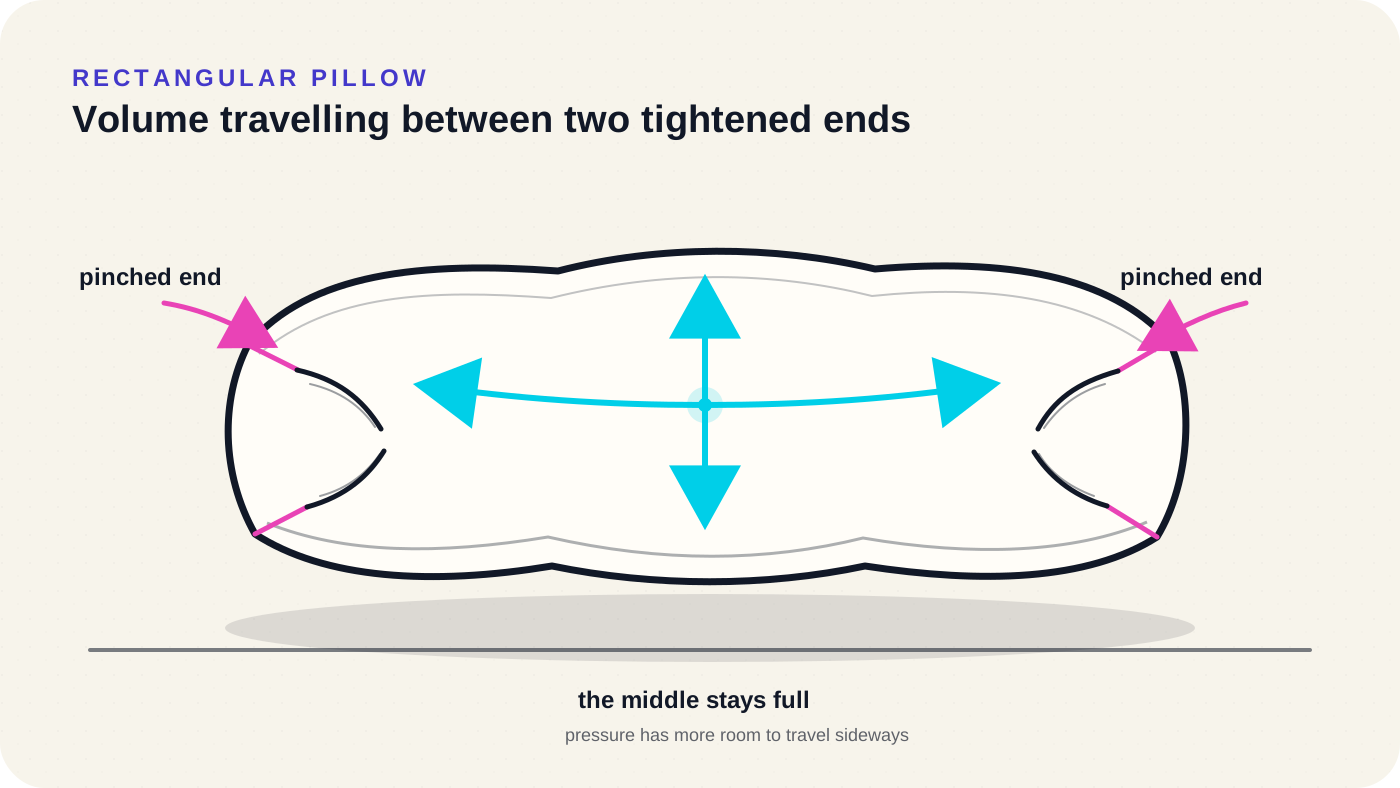
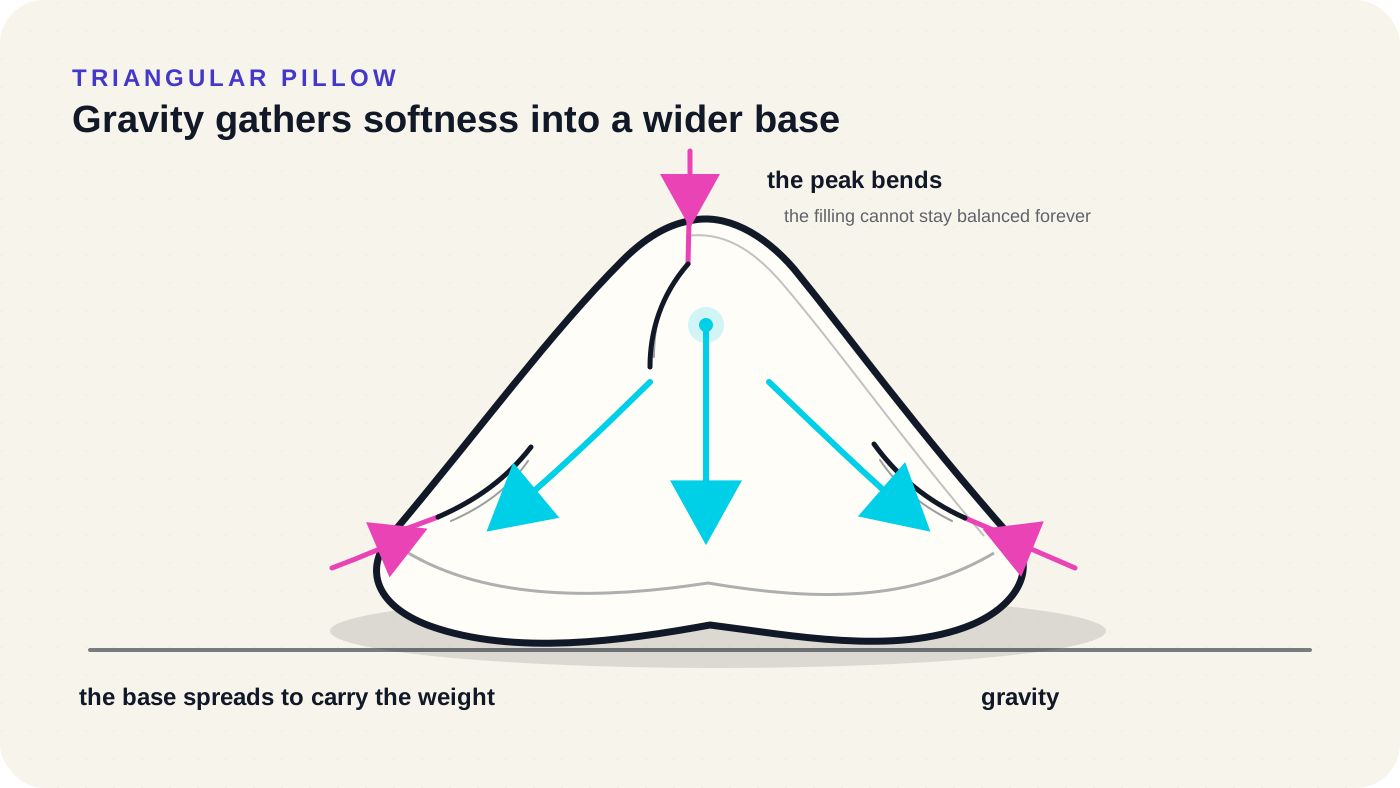
The missing thing is pressure. Inside, the filling pushes outward, searching for space, while the seams pull everything back together. Gravity gathers the weight toward the floor. The corners tighten, the centre rises, and one side may lean because the stuffing has wandered there. A crease forms where the fabric can no longer remain smooth. A pillow is a small argument between forces, and its shape is the temporary agreement they reach.
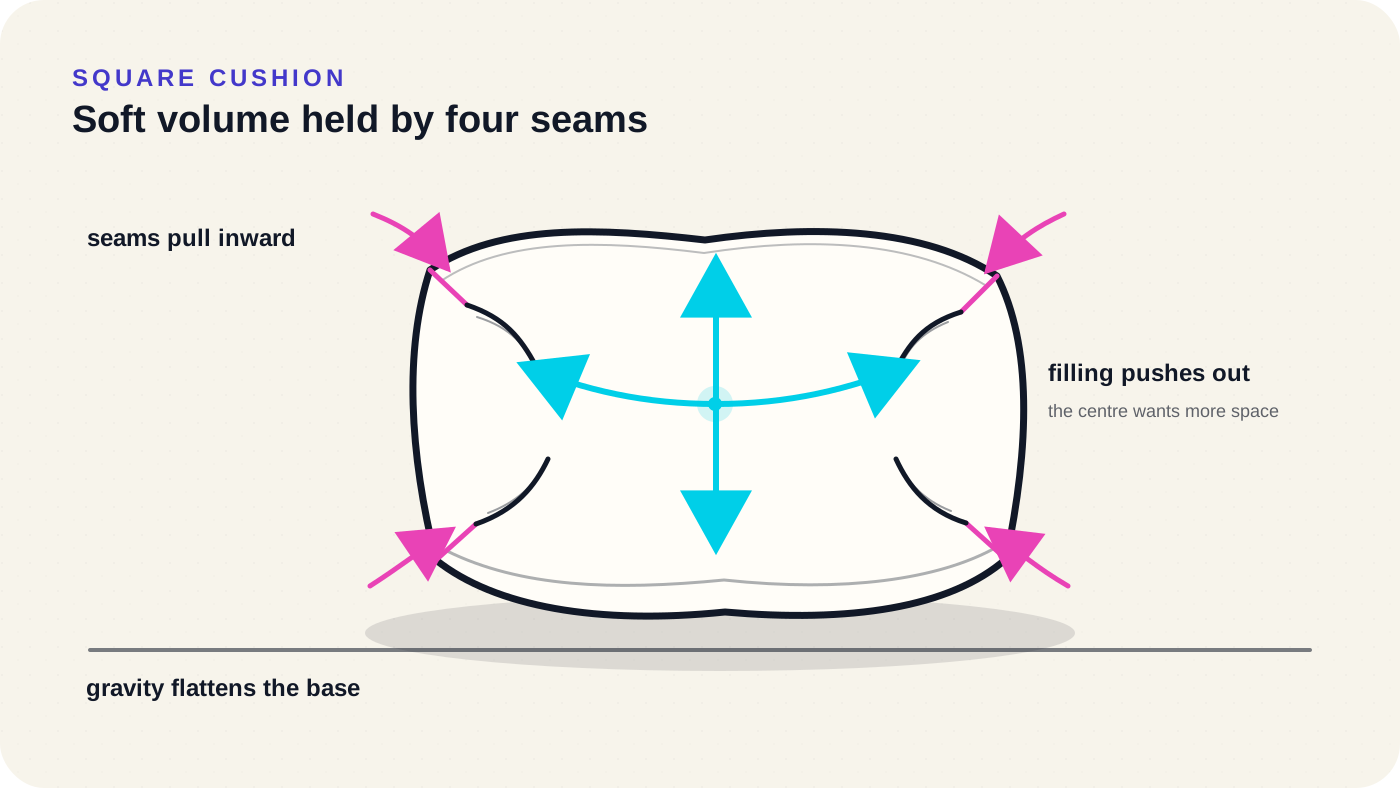
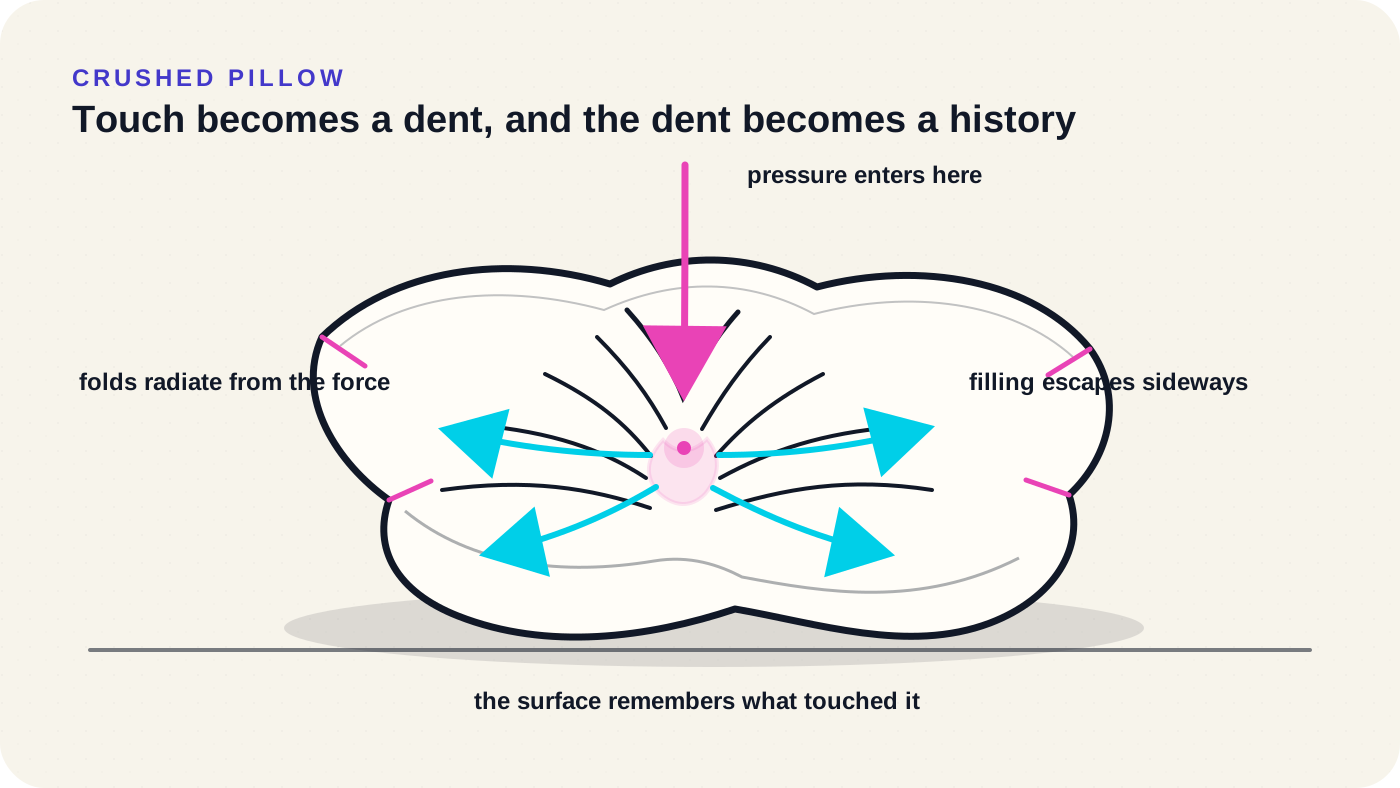
Once I began to see that, drawing changed. I stopped treating wrinkles as decoration and started looking for their origin. A line travelling inward from a corner speaks of tension. A fold resting along the bottom speaks of weight. A hollow in the centre remembers a hand, a head, or another pillow placed above it. A swollen edge tells you where the filling has gathered. The surface keeps a record of everything that has happened.
This is why the most useful drawing instruction is rarely to put a line in a particular place. A line placed without a cause feels empty, even when it looks correct. The better question is what made the fabric move this way. Drawing becomes a kind of listening. You look at the object and wait for it to tell you where it is being pulled, where it is carrying weight, where it is resisting, and where it has finally given in.
The same way of seeing extends far beyond pillows. An interface also has seams. A company has pressure points. A city stretches, sags, and gathers around the forces acting upon it. A strange button may carry the weight of an old technical decision. A confusing form may contain the memory of legal requirements, fraud prevention, analytics targets, or several teams pulling in different directions. An awkward street may reveal a river that once flowed there, a property line drawn centuries ago, or a road designed for a city that no longer exists.
Visible forms are often the shadows of invisible systems. What looks arbitrary may simply be the place where several forces met. Beginners add wrinkles because soft things are supposed to have wrinkles. Designers add features because products are supposed to have features. Organizations add processes because serious organizations are supposed to have processes. The result may look convincing from a distance and still feel strangely lifeless. The marks are present, but the pressure is missing.
AI can now produce the surface almost instantly. It can invent fabric, light, dust, scratches, reflections, and beautiful imperfections. It can generate the appearance of a history that never happened. This makes seeing causality more valuable. A machine can draw the wrinkle. The deeper skill is knowing what had to happen for the wrinkle to exist.
That knowledge allows you to turn the pillow, crush it, stack it, lift it, or imagine it from above. You are no longer copying a shape. You understand the small physical story that created it. Drawing becomes reverse engineering, but it is also archaeology. You begin with the surface and excavate the forces beneath it: the seam, the weight, the pull, the place where the material resisted, and the place where it finally surrendered.
Every wrinkle has a cause. The real skill is learning to see the invisible hand that made it.
Connected reading
- The Interface That Wants You to Touch It
- A Tomato Is a Map of Power
- The AI Was Easy. Understanding the Company Was Hard.
- The Prototype Has Become Too Cheap to Trust
AI authorship note
This essay began when Kris Haamer shared a sketch sheet of pillows and asked to be taught how to draw them through illustrations. Kris identified the Raw Drafts angle in the idea that every wrinkle records a force, pushed the writing toward a more poetic voice, and asked for the article to remain in paragraphs. AI supported the drawing explanation, drafting, editing, SVG illustration design and implementation. Kris selected the final argument, tone and publication decision.