

2026-08-14 · 11 min read · Raw Drafts / AI / Digital Archaeology / Archives / Unfinished Work
AI Is Digging Up the Projects We Left Behind
AI may be more interesting as a way to reopen old films, code, research, manuscripts and archives than as another machine for making new things.
I keep noticing this weird thing happening with AI. Everyone is talking about generating new stuff, but one of the most interesting uses is almost the opposite. It is helping people go backwards. Into old hard drives, abandoned GitHub repos, unfinished films, research folders, manuscripts, recordings, websites, and projects they stopped thinking about years ago.
We have been creating digital sediment for decades. Old websites. Video footage. Code. Notes. PDFs. Emails. Things called final2, final-final and real-final. The files are technically still there, but the context is gone.
That context loss is what makes old projects feel dead. Opening a project from ten years ago can be more work than starting a new one. You first have to remember what you were trying to do, which version mattered, who these people were, what was broken, and why you stopped.
AI suddenly makes this much cheaper. You can point it at the remains and basically say: explain what happened here.
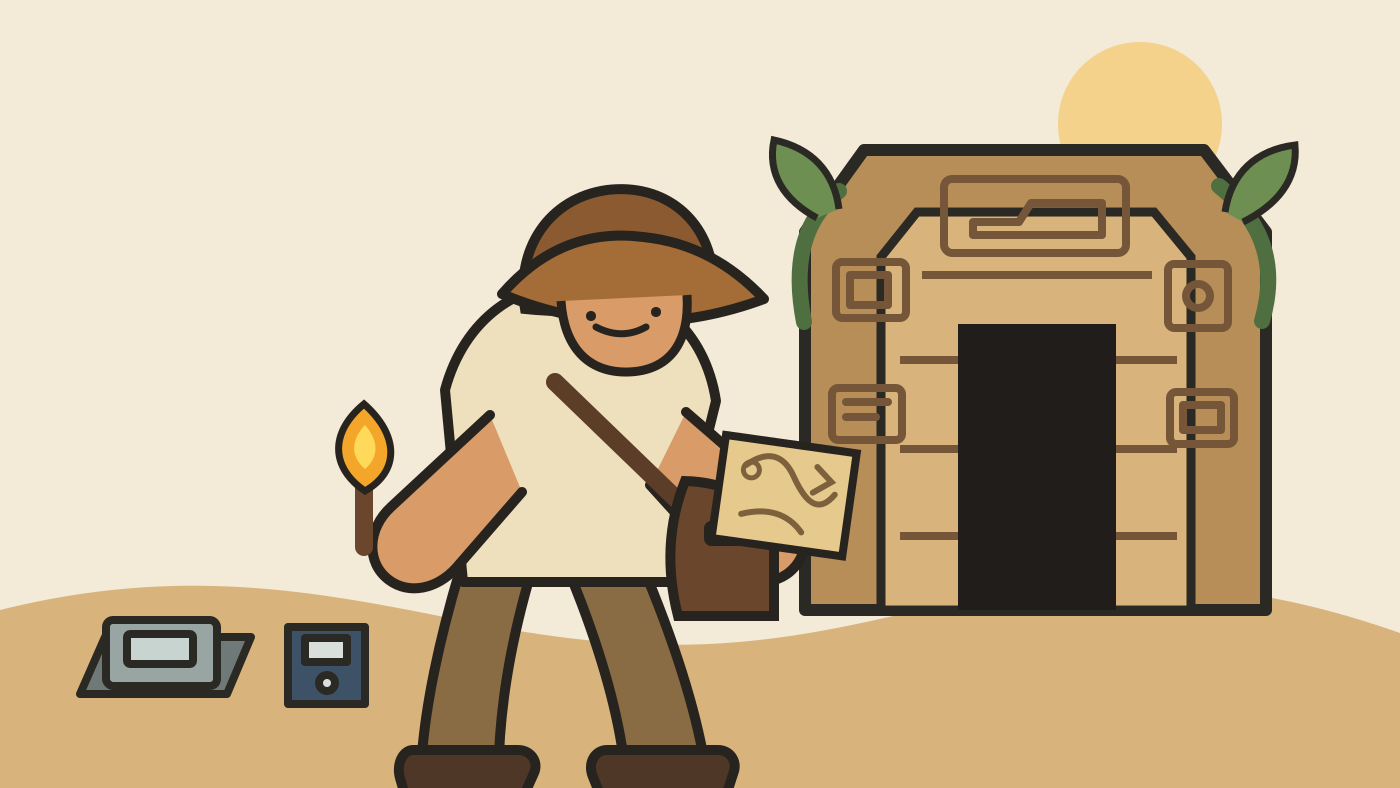
I think digital archaeology is a useful way to describe this because it is not just search. Search assumes you know what you are looking for. Archaeology begins when you have fragments and need to reconstruct the thing that produced them.
Project review: GitHub made the abandoned project the prompt
GitHub ran something in 2026 called the Finish-Up-A-Thon. The premise was almost comically direct: take an abandoned project and finish it using Copilot.
The challenge ran from May 21 to June 7 and attracted more than 500 submissions. GitHub and DEV were not asking people to generate a random new app. The thing that already existed was the starting material. The abandoned side project, the old hackathon prototype, the forgotten repo. The completion arc itself was one of the judging criteria.
One of the winners, Daniel Balcarek, went back to a C# WinForms puzzle game from 2014 and turned it into a modern browser-playable version. Another winner, Dhruv Jani, revived ShelfTalk, a semester project that had never properly crossed the finish line.
I like this example because there is no metaphor here. GitHub literally turned resurrection into a challenge category.
The code survived for twelve years. What disappeared was the mental model of the person who wrote it. The old dependencies became strange. The architecture became unfamiliar. The small decisions that once lived in someone's head were no longer available.
AI becomes a kind of interpreter between your current brain and your old brain.
That changes what a dead repo means. A repo might not be dead anymore. It might just be waiting for the cost of understanding it to become low enough.
Project review: Scott Cunningham opened a ten-year-old research folder
Economist Scott Cunningham did something similar with research. In January 2026 he published a walkthrough of using Claude Code on a roughly ten-year-old folder of empirical work about abortion clinic closures.
This is more interesting to me than code resurrection because a research project contains much more than code. There are assumptions, old datasets, methodological choices, temporary workarounds, collaborator decisions, filenames that meant something at the time, and questions that nobody documented because everyone involved still remembered them.
Ten years later, even the original researcher becomes an archaeologist of his own work.
Cunningham used Claude Code to begin reconstructing the empirical project and the work around it. The original research did not disappear. The context did.
That makes me wonder how much dormant science exists like this. Universities must have an insane amount of unfinished research sitting on servers. Old PhD folders. Experiments that never made it into papers. Datasets collected for questions nobody had time to answer. Negative results. Scripts that only run on the laptop of a research assistant who graduated eight years ago.
There may be a lot of science down there.
The interesting possibility is not that AI writes more papers. It is that AI makes old research legible enough to reopen.
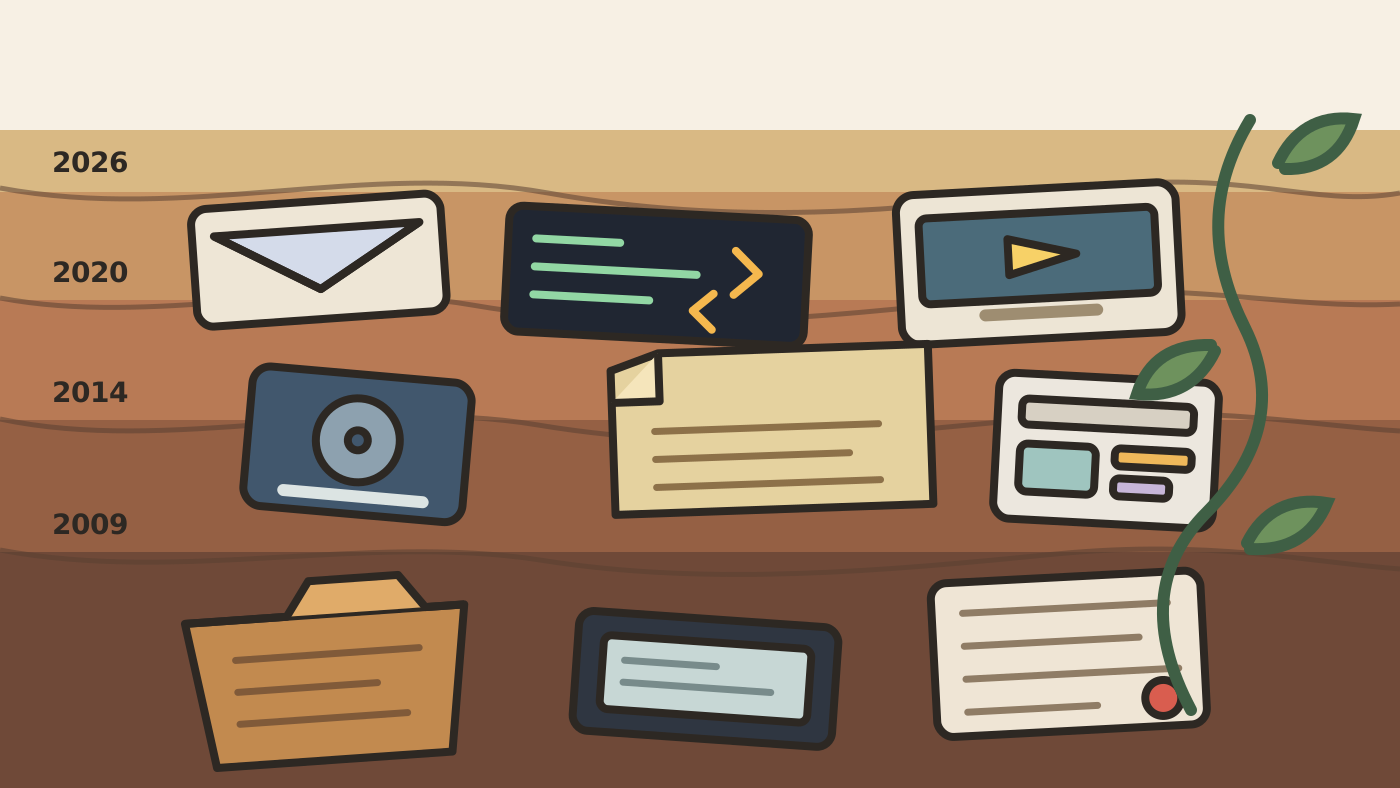
Project review: Yogesh Kumar let the dead project debug itself
Researcher Yogesh Kumar had an even stranger version of this experience. In March 2026 he picked up old eCLIP research code, cleaned up the legacy dependencies and gave it to Claude Code inside an autonomous experimentation loop inspired by Andrej Karpathy's Autoresearch.
Then he let it run.
The agent completed 42 experiments in one Saturday, committed 13 changes and reverted 29. The mean rank dropped from 344.68 to 157.43, a 54 percent reduction.
But the part that interests me is not the benchmark improvement. The single biggest improvement came from the agent finding a bug in Kumar's existing code. A temperature clamp was too restrictive. Relaxing it was worth more than all the later architectural experiments combined.
So now the archaeology can criticize the archaeologist.
AI is not only helping you remember what your previous self did. It can inspect your previous self's work and notice something you missed.
That changes the archive again. It is no longer only evidence of what happened. It becomes active material that can still produce discoveries.
The resurrected project can come back better than it was when it was alive.
Project review: The Beatles waited for the missing tool
The Beatles' Now and Then is probably the most famous version of this outside software.
John Lennon recorded the demo in the late 1970s. Yoko Ono gave the recording to Paul McCartney, George Harrison and Ringo Starr in 1994, together with the demos that became Free As a Bird and Real Love. The three surviving Beatles worked on Now and Then in the 1990s, but the recording had a problem. Lennon's voice and piano could not be separated cleanly enough to finish the song the way they wanted.
So the song stopped.
Then Peter Jackson's team developed machine-learning-based audio separation technology for The Beatles: Get Back. The system could pull individual voices and instruments out of a mono recording. The same technique was applied to Lennon's old home demo, separating his voice from the piano.
Paul and Ringo could finally continue.
The song was released in 2023.
The thing I love about this example is that the project was basically waiting for the missing tool to be invented.
This suggests a completely different category of abandoned project. Things that were not abandoned because they were bad ideas, but because they happened too early.
Some film somebody shot in 2007 might have been impossible to finish properly then and trivial now. Some startup from 2011 might have depended on a technology that did not exist. Some scientific analysis might have required computation that was ridiculous at the time. Some recording might have been unusable because the audio was too bad.
Maybe some projects are not dead. They are frozen.
Project review: a nine-year-old manuscript crossed the last ten percent
There is a much less dramatic example that might actually be more common.
In 2025 writer Jenny Alexander described finding a manuscript she had written in 2016 and thought she had deleted. She uploaded the old text to AI, asked for feedback, went back and forth with the suggestions, edited the result herself and finally self-published the book nine years after writing it. She also used AI as part of the cover ideation process.
The important detail is that AI did not create the original story. The manuscript already existed.
The project was stuck in the strange zone between written and published.
This is probably how a huge number of things die. Not at 20 percent complete. At 90 percent.
The interesting idea exists. Most of the work is done. Then there are twenty annoying tasks left and life moves on. Editing. Packaging. Exporting. Fixing the old dependency. Writing the description. Finding the missing image. Remembering what the project was called. Making the build work on a current operating system.
AI is extremely good at eating that kind of friction.
Maybe one of the biggest effects of these tools will simply be more things crossing the line from almost finished to finished.
Project review: Orson Welles and the line between recovery and invention
Then there is an even stranger version.
Orson Welles originally made a much longer version of The Magnificent Ambersons. RKO cut the film while Welles was away and the removed footage was later destroyed. The missing material is not sitting in a vault waiting for restoration. It is gone.
In 2025 Showrunner announced a project to reconstruct the missing 43 minutes using surviving scripts, photographs, set documentation, 3D reconstruction, live actors and generative AI. Filmmaker Brian Rose had already spent years rebuilding missing frames and sets from archival material. By early 2026 the project had moved into a hybrid form where archival evidence, live performance and synthetic imagery were being combined.
This is where digital archaeology starts getting philosophically messy.
A generated Welles shot is obviously not a recovered Welles shot.
But archaeology has always had reconstruction built into it. We find foundations and draw the building. We find fragments of a pot and imagine the vessel. The question is how clearly we distinguish the surviving artifact from the reconstruction around it.
AI makes that distinction much harder because the reconstruction can become extremely convincing.
We are going to need better language for the difference between recovering something, reconstructing something and inventing something that looks recovered.
That might become one of the core ethics of digital archaeology.
The archive starts talking
The pattern across all these projects is basically the same. Something existed. Something interrupted it. Time passed. The context disappeared, but the material stayed.
Then AI made re-entry cheap enough that the project became active again.
I can imagine giving an AI one of my folders from fifteen years ago. There are emails, invoices, video files, old websites, notes, PDFs, random screenshots and things with filenames that mean absolutely nothing to me now.
Instead of spending three days opening everything, I ask what happened.
It tells me who was involved. What the original idea was. When it changed. Which files seem important. What decisions were made. Where the project got stuck. What footage was never used. Which technical problem seemed impossible at the time.
Then it says the weird part.
That problem is easy now.
Do you want to continue?
That is a very different relationship with the archive.
Re-entry is the real problem
Maybe the reason so many projects die is not that we stop caring about them. We lose the mental state required to enter them.
A project is partly files and partly a temporary model living inside a person's head. When the model disappears, the files become ruins.
This is why reopening an old project feels exhausting. You are staring at evidence left by a stranger who happens to be you.
AI is unusually good at rebuilding models from evidence.
So perhaps one of the things it is making cheap is not creation. It is re-entry.
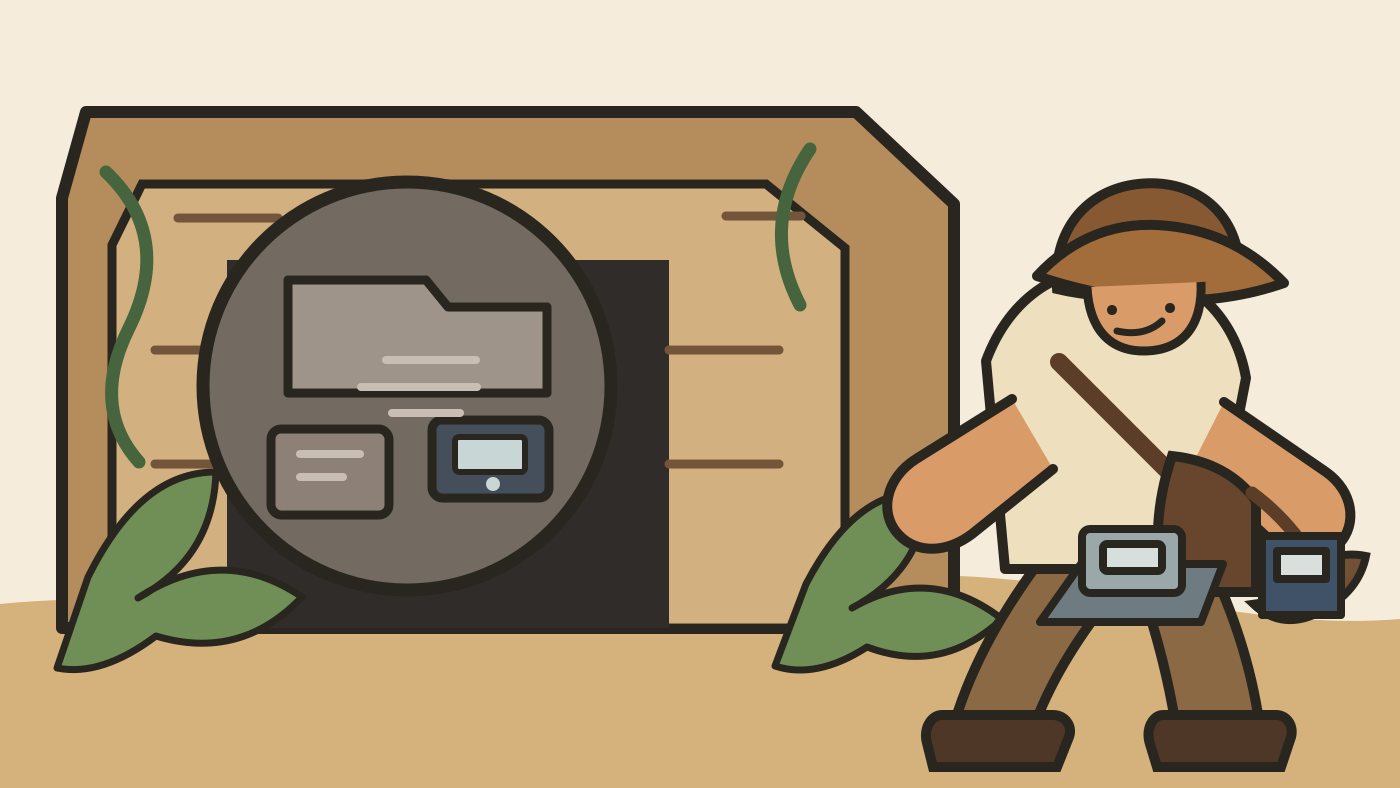
We spent the last twenty years solving storage. Gmail kept the messages. GitHub kept the commits. Google Photos kept the photos. Hard drives got bigger. Cloud storage became effectively infinite.
But storage does not preserve understanding.
We preserved the ruins.
AI is starting to make the ruins readable again.
Maybe the next AI interface is a shovel
The first few years of generative AI have been obsessed with the blank page. The empty prompt box. What do you want to make? Generate an image. Generate an app. Generate a video. Generate another document.
But maybe one of the more interesting AI interfaces is not a blank page.
Maybe it is a shovel.
There is an enormous amount of unfinished human work sitting on disks right now. Films. Research. Games. Albums. Websites. Businesses. Books. Experiments. Documentaries. Entire hard drives.
Some of those projects probably deserve to stay buried. Archaeology does not mean everything needs to be rebuilt.
But some of them died for stupid reasons. The wrong tool did not exist. The person ran out of money. The last ten percent became annoying. The dependencies broke. The collaborators moved on. The author forgot what was in the folder. The footage became too difficult to search. The research assistant graduated. The person simply became somebody else for a while.
AI changes the cost of going back.
That feels different from generating more stuff.
The first question of generative AI was: what can we make?
The more interesting one might be: what did we already make, why did we stop, and can we go back?
AI authorship note
This essay started with Kris Haamer noticing that AI was helping people revive old digital projects and asking for concrete examples. AI supported the web research, source checking, drafting, editing, the three original SVG illustrations and the GitHub publishing workflow. Kris directed the voice, requested paragraph-based writing, selected the digital archaeology frame and asked for the archaeology-adventure visual language used in the article.